
Age-Related Macular Degeneration (AMD)
AMD is the most common cause of sight loss in the UK, affecting the central part of your vision. While it doesn't lead to complete blindness, it can make everyday tasks like reading, recognising faces and driving increasingly difficult. Early detection through regular eye tests and OCT scanning can make a significant difference.
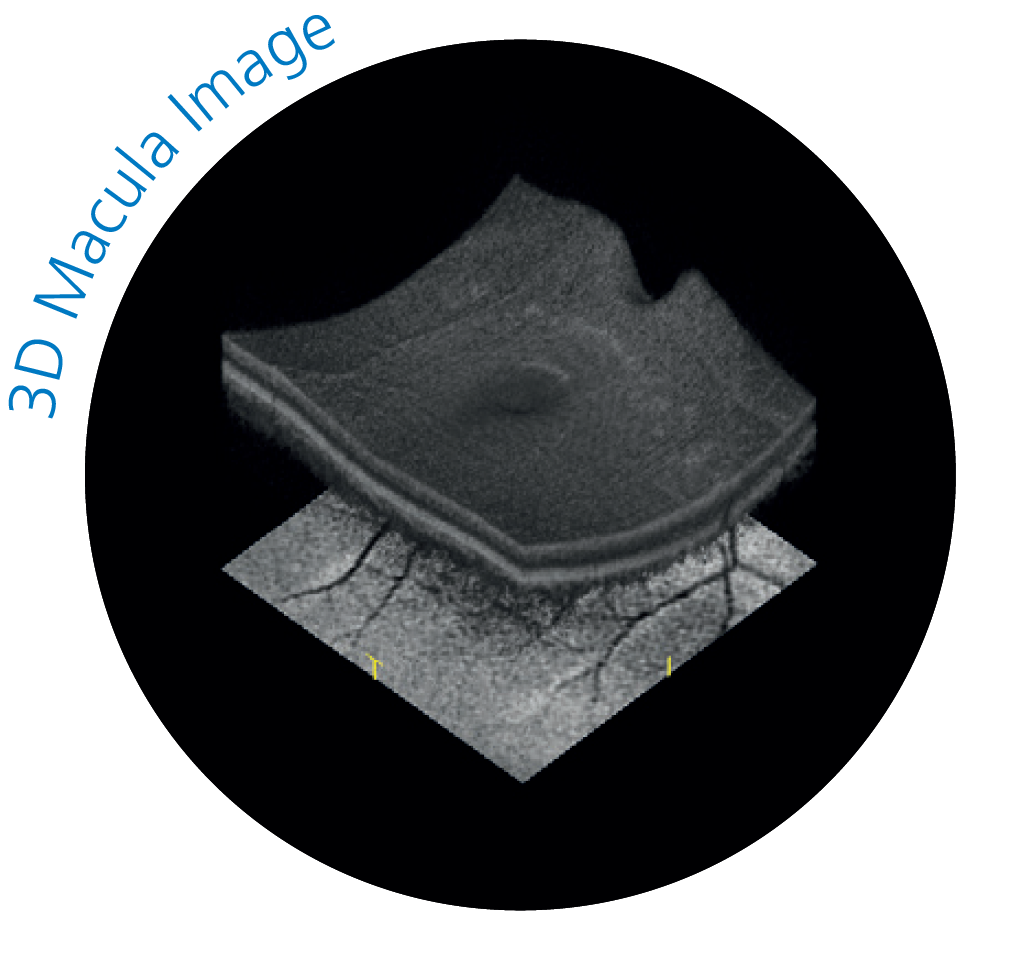
3D Macular Scan
Our OCT scanner creates detailed 3D images of the macular layers, detecting the earliest changes associated with AMD.
Understanding AMD
The macula is a tiny area at the centre of your retina responsible for detailed central vision. When the cells in this area become damaged, your central vision deteriorates while peripheral (side) vision usually remains unaffected.
Dry AMD
The most common form, accounting for around 90% of cases. Dry AMD develops slowly as the macular cells gradually break down. Vision loss tends to be gradual, and many people retain useful vision for years.
There is currently no medical treatment for dry AMD, but lifestyle changes and nutritional supplements may help slow its progression.
Wet AMD
Less common but more serious. Wet AMD occurs when abnormal blood vessels grow beneath the macula and leak fluid or blood, causing rapid damage to central vision.
Wet AMD can be treated if caught early, usually with injections that stop the abnormal blood vessel growth. Early detection through OCT scanning is crucial.
Symptoms of AMD
In early dry AMD there may be no noticeable symptoms. As it progresses, you may notice:
Urgent: If you notice a sudden change in your central vision, especially distortion of straight lines, contact us or your GP immediately. This could indicate wet AMD, which requires prompt treatment.
Risk Factors
Reducing Your Risk
While you can't control your age or genetics, lifestyle changes may help reduce your risk or slow the progression of AMD.
Concerned about age-related macular degeneration? Regular eye tests can detect problems early. Book an eye test and speak to our team.
Book an Eye Test
Our Premier Plus examination includes OCT scanning, which can detect the earliest signs of AMD. If you're over 50 or have a family history, regular screening is especially important.